Home > Blog > Magnetic Float Level Gauge: Working Principle and Types
Magnetic Float Level Gauge: Working Principle and Types
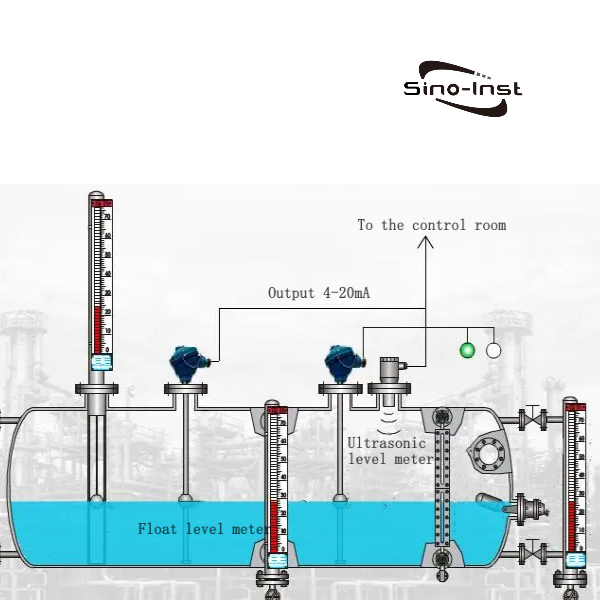
The Magnetic Float Level Gauge continuously measures the liquid level in a tank based on the principles of buoyancy and magnetic coupling. It indicates changes in liquid level by utilizing the influence of a magnet on nearby magnets; this mechanical structure is simple yet highly effective. Its simple structure provides fast and stable liquid level information. Furthermore, when equipped with an electronic transmitter, it can be used for continuous monitoring and control of liquid levels.
Magnetic Float Level Gauges based on the principle of magnetic coupling can be divided into two main categories based on their structural design: Magnetic Flap Level Indicators/Gauges and Magnetic Float Level Sensors.
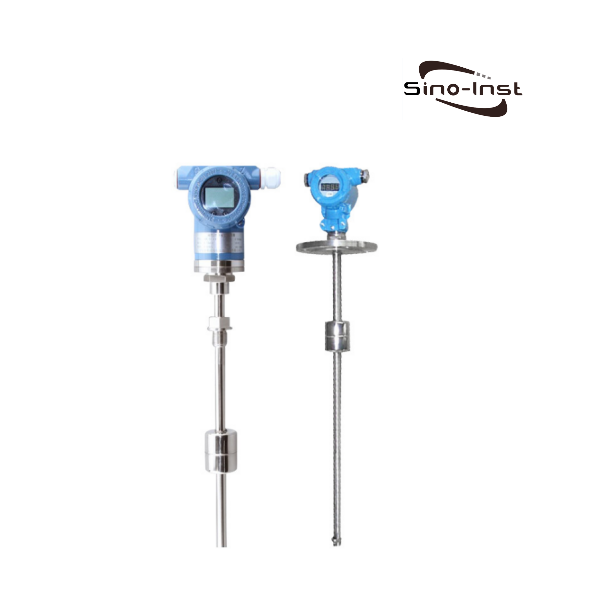
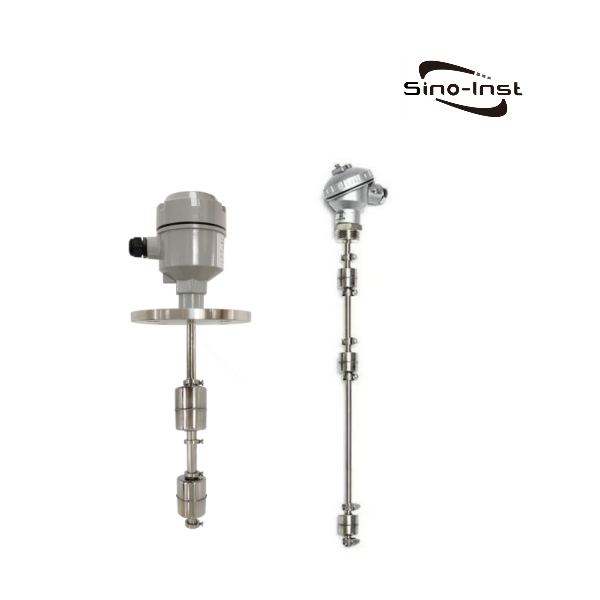
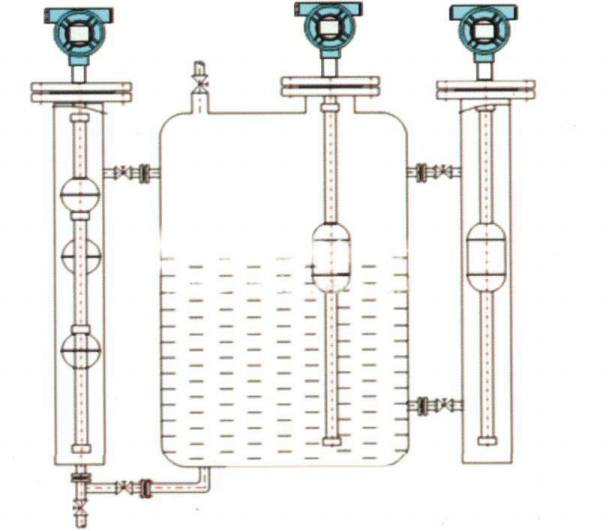
Magnetic Float Level Sensors are mounted on the top of the tank. A float in the liquid is subject to buoyancy and rises and falls with the liquid level. The magnetic coupling converts the liquid level change into an electrical signal, enabling liquid level display and remote monitoring.
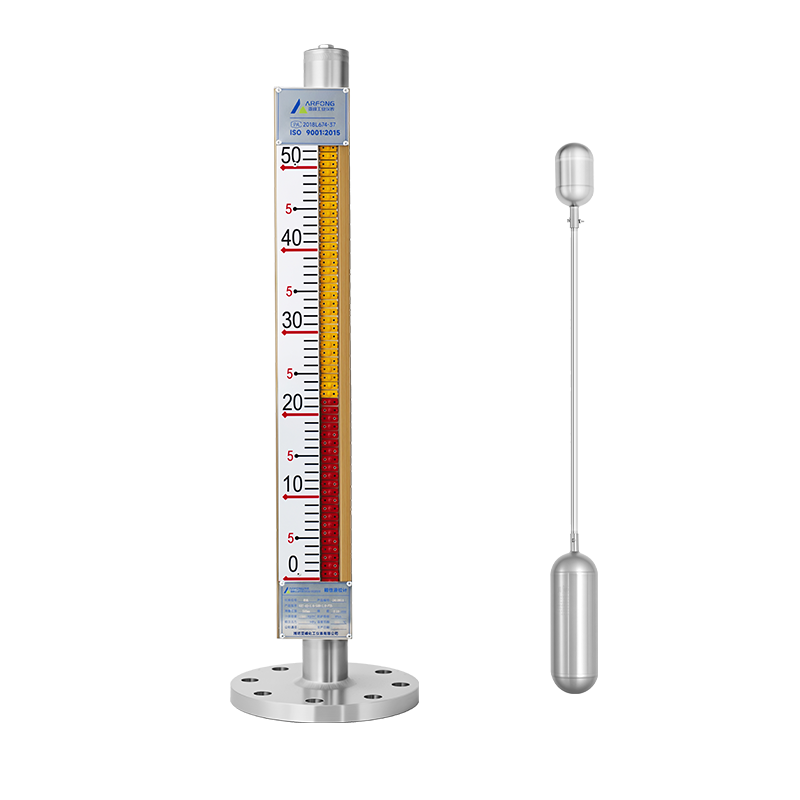
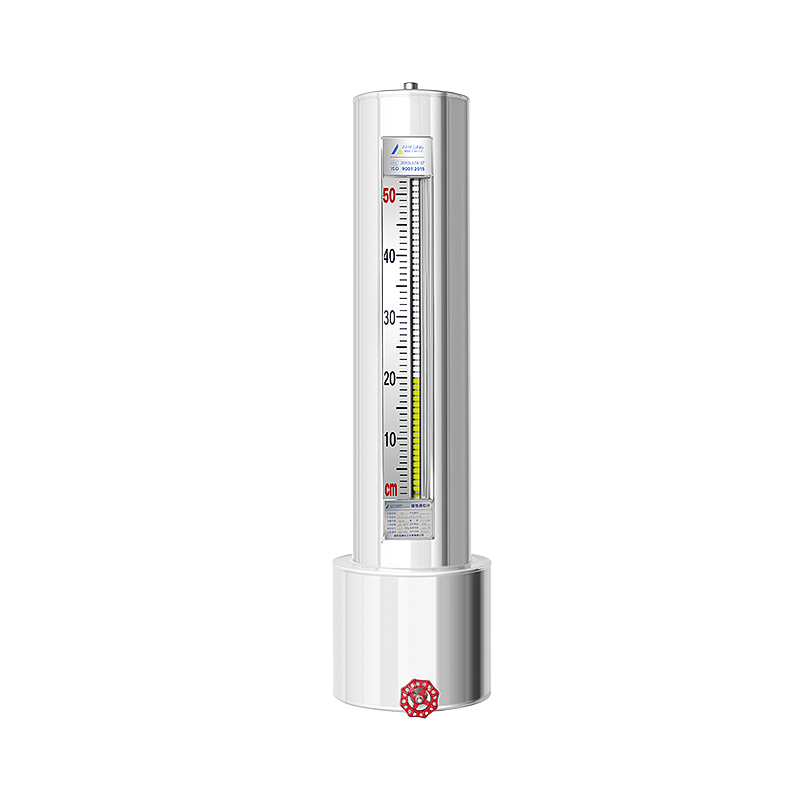
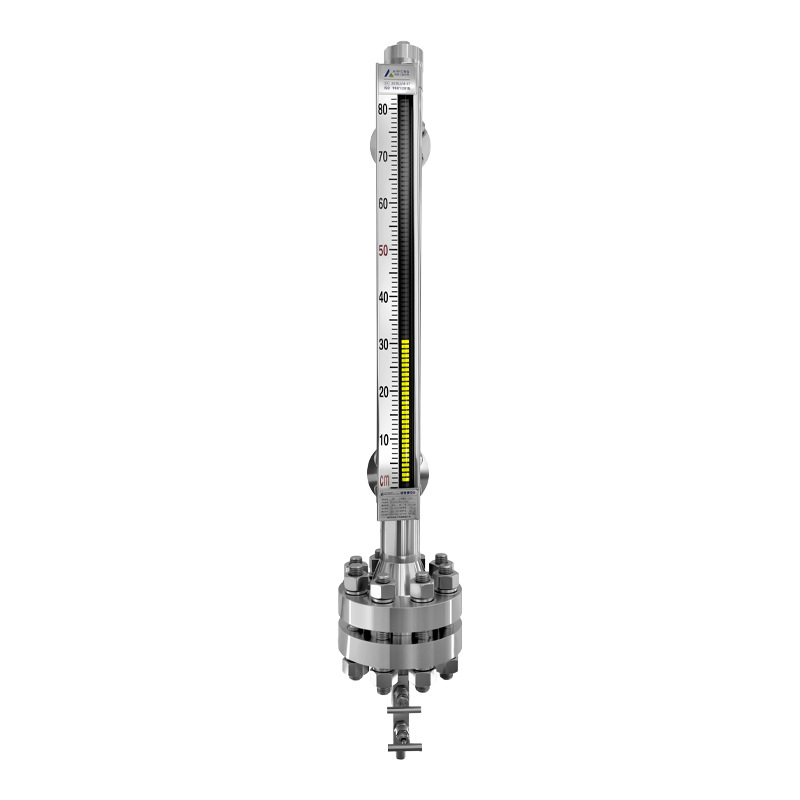
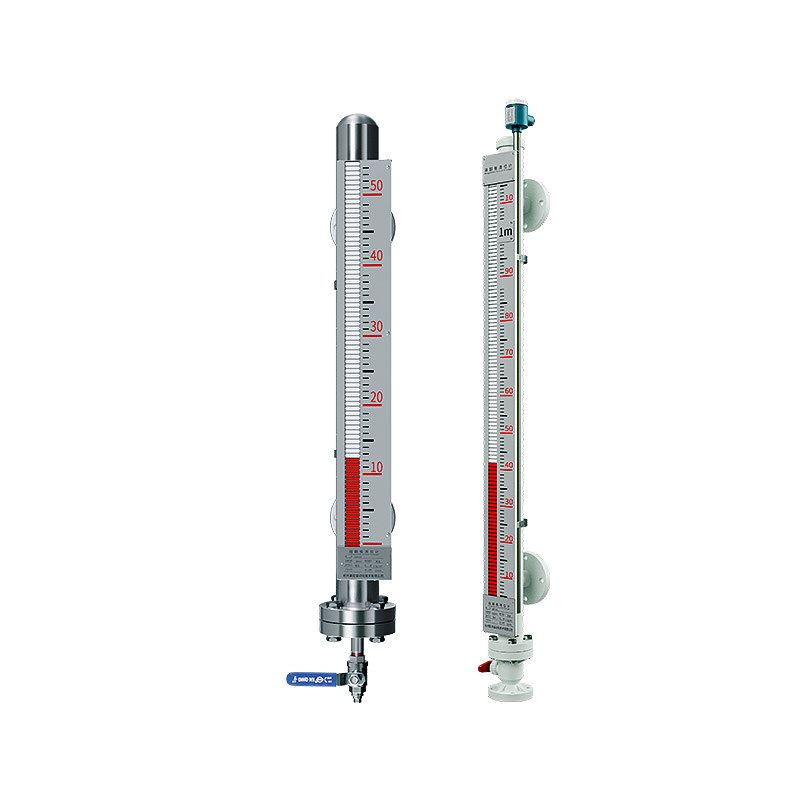
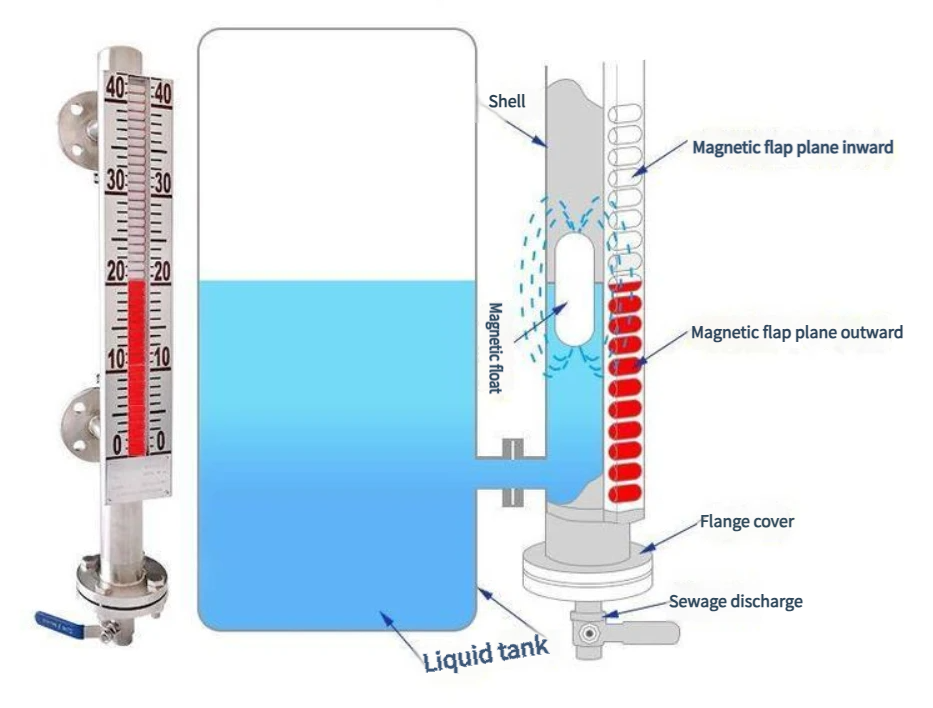
Magnetic Flap Level Gauges utilize the principles of buoyancy and magnetic coupling. A float rises and falls within a bypass pipe with the liquid level, translating the level change into a clear red and white indicator light, providing a precise indication of the liquid level.
Magnetic Float Level Sensors consist of a probe, float, and display. They are typically installed on top of the tank. The probe length and material are customized based on the tank’s parameters. Threaded, clamp, and flange mounting options are available. The local display shows the real-time liquid level value.
It is particularly important to note that Magnetic Float Level Sensors require power to display locally and output electronic signals.
Magnetic Flap Level Indicators/Gauges consist of a body, a flapper box (composed of red and white dual-color magnetic flaps), a float, and a flange cover. They are used for liquid level measurement in various liquid containers. Magnetic Flap Level Indicators can be used in high-temperature, explosion-proof, corrosion-resistant, and food and beverage applications for local or remote display and control of liquid levels.
Magnetic Flap Level Indicators can be mechanically configured, displaying the liquid level in real time without a power source. With level alarms and control switches, they can provide upper and lower limit alarms and control for liquid levels or interfaces. With a level transmitter, the liquid level can be measured. The liquid level signal is converted into a standard two-wire 4~20mA DC signal to enable remote detection, indication, recording and control.
Working Principle Details
Magnetic Float Level Sensors utilize the buoyancy of a liquid on a magnetic float, based on Archimedes’ principle of buoyancy and magnetic coupling technology. The float, containing a magnet, rises and falls with the liquid level, driving a magnetic element within the measuring conduit through magnetic coupling.
When the magnetic element moves to a specific position, its magnetic field triggers a reed switch or changes the state of a magnetoresistive sensor, Hall effect sensor, etc., thus converting the liquid level change into an electrical signal output. The displacement of the magnetic float with the changing liquid level is converted into a switching signal or a continuous analog signal (e.g., 4-20mA) through a signal conversion mechanism.
The Magnetic Flap Level Indicator is developed based on the principles of buoyancy and magnetic coupling. When the liquid level in the measured container rises or falls, the magnetic float in the main tube of the level gauge also rises or falls accordingly. The permanent magnet inside the float transmits this information via magnetic coupling to the magnetic flip indicator, driving the red and white flip columns to rotate 180 degrees.
When the liquid level rises, the flip column changes from white to red; when the liquid level falls, the flip column changes from red to white. The boundary between the red and white areas on the indicator shows the actual height of the liquid level inside the container, thus providing a clear indication of the liquid level.
Magnetic Float Level Sensors Types
Magnetic float level sensors can be categorized into standard stainless steel float level sensors and corrosion-resistant float level sensors based on their materials.
Standard float level sensors are made of 304 or 316L stainless steel and are suitable for measuring most liquids. They are also certified for both explosion-proof and intrinsically safe operation, allowing use in environments containing hazardous explosive gases.
Corrosion-resistant float level sensors utilize PTFE or PP coatings, providing enhanced corrosion resistance and enabling the measurement of highly corrosive liquids.
Magnetic Flap Level Indicators Types
Magnetic Flap Level Indicators/Gauges offer a wide range of customizable parameters and can be categorized in several ways.
By Material:
Stainless Steel Magnetic Level Gauge: Suitable for general non-corrosive or weakly corrosive media.
Corrosion-Resistant Magnetic Level Gauge: Uses special corrosion-resistant materials (such as PP, PVC, PTFE, etc.) or undergoes corrosion-resistant treatment; suitable for measuring corrosive media.
By Installation Method:
Top-mounted magnetic level gauge: Installed on the top of the container, connected via flange or thread, suitable for most measurement applications.
Side-mounted magnetic level gauge: Installed on the side of the container, suitable for applications with limited space or requiring lateral measurement.
Bottom-mounted magnetic level gauge: Installed at the bottom of the container, less common, but has unique advantages in certain specific applications.
By Display Method:
Local Display Magnetic Level Gauge: Provides only on-site indication, displaying the liquid level directly through changes in the color of the flip plate.
Remote Transmission Magnetic Level Gauge: In addition to local display, it incorporates a remote transmitter to convert the liquid level signal into a standard electrical signal (e.g., 4-20mA, HART), facilitating remote monitoring and automated control.
By Functional Characteristics:
Standard Magnetic Level Gauge: Only has basic liquid level measurement and display functions.
High-Temperature and High-Pressure Magnetic Level Gauge: Utilizes special materials and design, suitable for liquid level measurement in high-temperature and high-pressure environments.
Frost-Proof Magnetic Level Gauge: Used in cold regions, it uses heating or insulation measures to prevent frost formation on the float surface, which would affect the reading.
Magnetic Level Gauge with Alarm Function: Provides audible and visual alarm signals when the preset upper and lower liquid level limits are reached.
Advantages and Disadvantages
Magnetic Flap Level Indicators/Gauges and Magnetic Float Level Sensors each have their advantages and disadvantages.
1. Float Level Sensors
Advantages:
Simple Structure: Float level sensors mainly consist of a housing, float, float rod, and indicating device, making their structure relatively simple.
Low Price: Compared to other types of level sensors, float level sensors are generally less expensive.
Easy Installation: Installation is relatively simple and suitable for various container shapes.
Intuitive Reading: The liquid level can be read intuitively through the interaction of the float and the scale.
Corrosion Resistance: Some models of float level sensors are made of stainless steel or corrosion-resistant materials, providing corrosion resistance.
Disadvantages:
Lower Measurement Accuracy: Compared to other high-precision level sensors, float level sensors may have slightly lower measurement accuracy.
Limited by Container Shape and Structure: Installation is significantly limited by the shape and structure of the container, making them unsuitable for all types of containers.
Unsuitable for Highly Corrosive or High-Temperature Media: In certain environments, float level sensors may malfunction or pose safety hazards.
3. Magnetic Flap Level Indicators/Gauges
Advantages:
Wide Measurement Range: Suitable for liquids of various viscosities, from low to high viscosity.
High Sensitivity: Detects liquid level changes through the flipping of a magnetic flap, exhibiting high sensitivity.
Good Stability: Magnetic flap level gauges are relatively stable during measurement and are not easily affected by external interference.
Remote Transmission and Adjustment Capabilities: Some models support remote transmission and automatic adjustment functions.
Corrosion Resistance: Some magnetic flap level gauges are made of corrosion-resistant materials, suitable for measuring corrosive liquids.
Disadvantages:
Higher Price: Compared to float level gauges, magnetic flap level gauges are generally more expensive.
Complex Installation: The installation process is relatively complex, requiring proper connection of the magnetic flap and magnetic sensor.
Susceptible to Electromagnetic Interference: In certain electromagnetic environments, magnetic flap level gauges may be affected by interference, impacting measurement accuracy.
Limitations: Limitations include a limited measuring range, especially when the container is large, resulting in a larger instrument size.
How to Choose Magnetic Float Level Gauge
When you decide to use a magnetic level gauge to measure the liquid level in a tank, it is recommended that you consider the following parameters to ensure you select the most suitable level gauge:
First, consider the properties of the medium being measured. This includes the medium’s chemical corrosivity, viscosity, and density. This ensures compatibility with materials in contact with the liquid.
Consider the internal parameters of the tank, primarily temperature and pressure. Extremely high temperatures (e.g., 500℃), extremely low temperatures (e.g., -196℃), and high pressures (>1.6MPa) require special attention.
The shape and dimensions of the tank, especially the height measurement range.
The internal structure of the tank, including whether there is agitation.
The choice of installation location for the level gauge. Is it only suitable for installation on the top of the tank, or is side mounting on the outside more appropriate?
Installation dimensions. For example, threads or flanges, and their corresponding dimensions.
Is there a local power supply? And is signal output required?
Measurement accuracy requirements.
Finally, when considering the project budget, try to choose the best quality products within the budget.
Powder/Dry Material Level Switches are devices used to detect when material reaches a preset level. When the material reaches or exceeds the set position, the level switch sends a signal,…
The water level pressure transducer measures water level based on the relationship between pressure and water level. It is an extremely simple, practical instrument. Of course, it can be used…
The portable ultrasonic liquid level indicator is a non-contact, handheld detection device primarily used to quickly determine the presence of liquid at a specific height within a sealed container without…
In the rapidly developing industrial sector, liquid level measurement is becoming increasingly important. Capacitive level transmitters are an important solution. They have no moving parts and are unaffected by water…
When using liquid nitrogen tanks, it’s crucial to constantly monitor the liquid nitrogen level inside. Replenishing the tank as needed ensures the sample remains at a constant -196°C, preserving its…
In industrial applications, there are many methods for measuring and monitoring liquid levels. For measuring liquid levels in open and pressurized tanks, engineers typically choose differential pressure level transmitters. This…
Magnetic Flap Level Indicators/Gauges and Magnetic Float Level Sensors are commonly used level measurement instruments in industrial tanks. They can be used for level detection of media in various towers, tanks, troughs, spherical containers, and boilers.
Of course, selecting the appropriate level gauge depends on the specific measurement parameters. If you require customized tank level gauges, please contact our sales engineers!
Zhang Wei, possesses 20 years of experience as an automation instrumentation engineer, specializing in the research, design, installation, commissioning, and maintenance of automation instruments.
Face to various instrument communication protocols (such as Modbus, Profibus, etc.), with solid hardware circuit design and software programming skills (proficient in C language and PLC programming). Has extensive project experience; projects he has led and participated in have all achieved outstanding results, improving product accuracy, reducing costs, and increasing production efficiency.
Possesses excellent communication and coordination skills and a strong team spirit, enabling him to quickly respond to customer needs and provide high-quality automation instrumentation solutions.