Differences Between Thermocouples
The main differences between various thermocouples are based on the different metal materials used, which results in different measurement ranges and characteristics.
The materials of a K-type thermocouple are: the positive electrode is a nickel-chromium alloy (containing 10% chromium), and the negative electrode is a nickel-silicon alloy (containing 2.5% silicon).
K-type thermocouple is a base metal thermocouple with strong oxidation resistance. It can measure the medium temperature from 0 to 1300°C. It is suitable for continuous use in oxidizing and inert gases. The short-term use temperature is 1200°C and the long-term use temperature is 1000°C. The relationship between thermoelectric potential and temperature is approximately linear, and it is currently the most commonly used thermocouple.
The nominal chemical composition of the positive electrode (KP) is: Ni:Cr=90:10.
The nominal chemical composition of the negative electrode (KN) is: Ni:Si=97:3.
However, K-type thermocouples are not suitable for use with bare wire in vacuum, sulfur-containing, carbon-containing atmospheres and alternating redox atmospheres. When the oxygen partial pressure is low, the chromium in the nickel-chromium electrode will be preferentially oxidized, causing the thermoelectric potential to occur. Great changes, but metal gas has little impact on it. Therefore, metal protective tubes are often used.
Type S thermocouple is a precious metal thermocouple.
The material of a s type thermocouple is:
- The nominal chemical composition of the positive electrode (SP) is a platinum-rhodium alloy, which contains 10% rhodium and 90% platinum.
- The negative electrode (SN) is pure platinum.
The long-term use temperature is 1300℃, and the short-term use temperature is 1600℃.
Nickel-chromium-copper-nickel type E thermocouple is also called nickel-chromium-constantan thermocouple.
The e type thermocouple material:
- The positive electrode (EP) is: nickel-chromium 10 alloy, with the same chemical composition as KP.
- The negative electrode (EN) is copper-nickel alloy.
- The operating temperature of this thermocouple is -200~900℃.
The thermoelectromotive force of type E thermocouple has the highest sensitivity and is suitable for measuring small temperature changes. It is suitable for use in environments with high humidity.
E thermocouple has good stability and better oxidation resistance than T type and J type thermocouple, and can be used in oxidizing and inert atmospheres.
E-type thermocouples cannot be used directly for sulfur at high temperatures. In reducing atmospheres, the uniformity of thermoelectric potential is poor.
The materials for the N-type thermocouple are: the positive leg is a nickel-chromium-silicon alloy (containing 14% chromium and 1.5% silicon), and the negative leg is a nickel-silicon alloy (containing 4.5% silicon).
The nominal chemical composition of the positive electrode (NP) is: Ni:Cr:Si=84.4:14.2:1.4.
The nominal chemical composition of the negative electrode (NN) is: Ni:Si:Mg=95.5:4.4:0.1.
It has strong anti-oxidation ability in temperature regulation below 1300℃, good long-term stability and short-term thermal cycle reproducibility, and good nuclear radiation resistance and low temperature resistance.
In the range of 400 to 1300°C, the linearity of the thermoelectric characteristics of the N-type thermocouple is better than that of the K-type thermocouple.
N-type thermocouples cannot be used directly in sulfur, reducing or reducing-oxidizing alternating atmospheres at high temperatures, nor can they be used directly in vacuum. It is also not recommended in weakly oxidizing atmospheres.
Iron-copper-nickel J-type thermocouple is also called iron-constantan thermocouple.
J type thermocouple material: The nominal chemical composition of the positive electrode (JP) is pure iron.
The negative electrode (JN) is copper-nickel alloy.
The J-type thermocouple is characterized by being cheap and suitable for vacuum oxidation in reducing or inert atmospheres. The temperature range is from -200 to 800°C, but the commonly used temperature is only below 500°C. Because beyond this temperature, the oxidation of the iron hot electrode will The speed is accelerated. If thick wire diameter wire is used, it can be used in high temperatures and has a longer life;
J-type thermocouples are resistant to hydrogen (H2) and carbon monoxide (CO) gas corrosion, but cannot be used in high-temperature (such as 500°C) sulfur (S)-containing atmospheres.
Type R thermocouple is a precious metal thermocouple. The long-term use temperature is 1300℃, and the short-term use temperature is 1600℃.
The materials for the R-type thermocouple are:
- The nominal chemical composition of the positive electrode (RP) is platinum-rhodium alloy, containing 13% rhodium and 87% platinum.
- The negative electrode (RN) is pure platinum.
Compared with the S type, its potential rate is about 15% larger. Other properties are almost the same.
A copper-copper-nickel T-type thermocouple is also called copper-constantan thermocouple.
T type thermocouple materials are: The positive electrode (TP) is pure copper. The negative electrode (TN) is copper-nickel alloy.
Among base metal thermocouples, it has the highest accuracy and good uniformity of the hot electrode;
Its operating temperature is -200~350℃. Because copper thermoelectrode is easy to oxidize and the oxide film is easy to fall off, when used in an oxidizing atmosphere, it generally cannot exceed 300℃;
In the range of -200~300℃, their sensitivity is relatively high;
Another feature of copper-constantan thermocouples is that they are cheap and are the cheapest among several commonly used stereotyped products.
Type B thermocouple is a precious metal thermocouple. The long-term use temperature is 1600℃, and the short-term use temperature is 1800℃.
B type thermocouple materials are:
- The nominal chemical composition of the positive electrode (BP) is platinum-rhodium alloy, which contains 30% rhodium and 70% platinum.
- The negative electrode (BN) is a platinum-rhodium alloy containing 6% rhodium.
Type B thermocouples are suitable for use in oxidizing and inert atmospheres, and can also be used in vacuum for short periods of time.
Type B thermocouples are not suitable for reducing atmospheres or atmospheres containing metal or non-metal vapors.
An obvious advantage of type B thermocouple is that there is no need to use compensation wires for compensation, because the thermoelectric potential is less than 3μV in the range of 0~50℃.
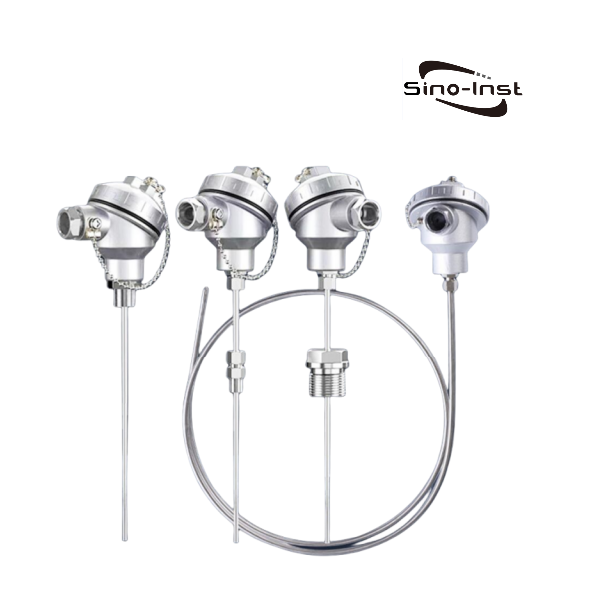
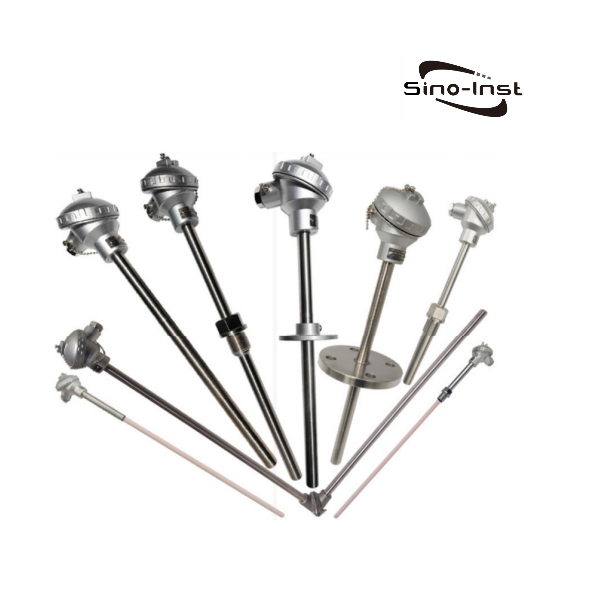
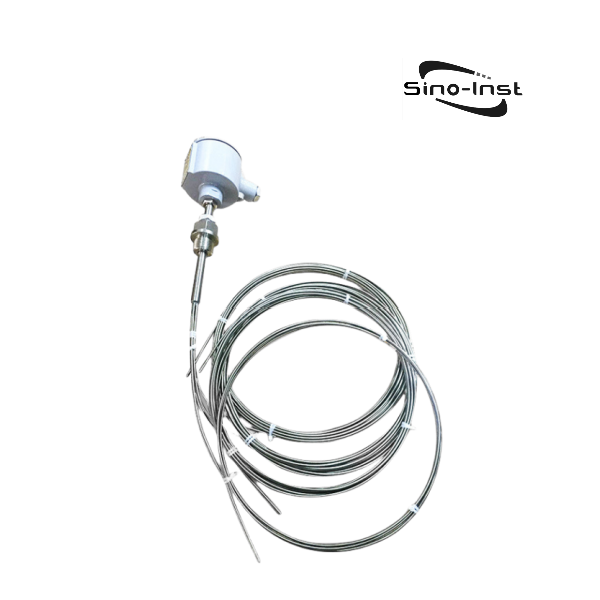
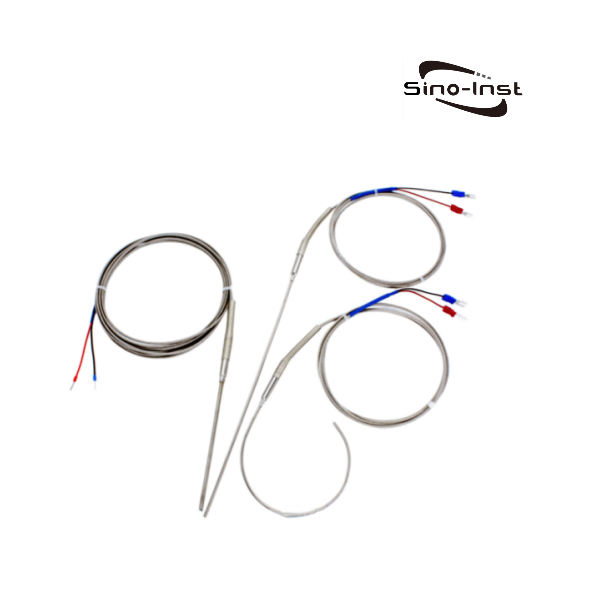
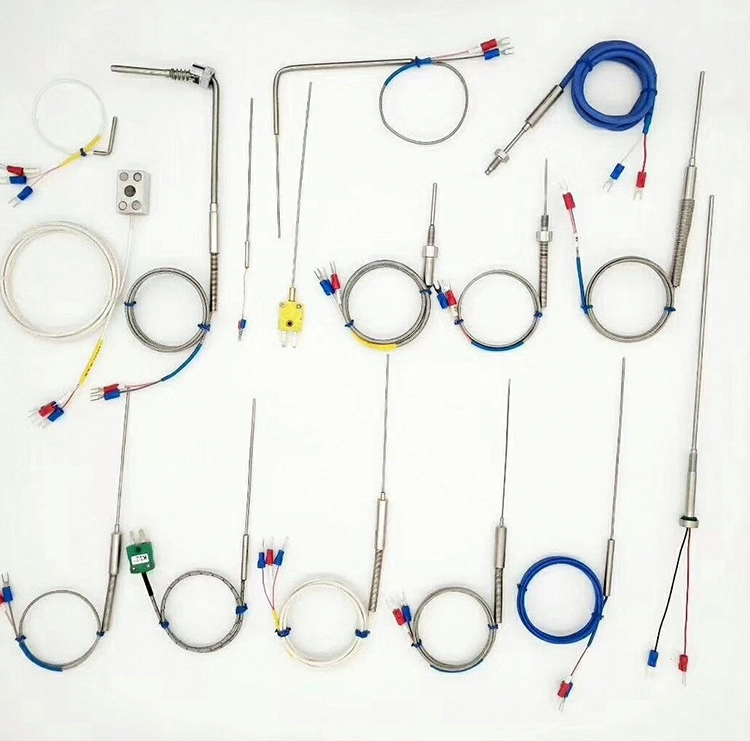
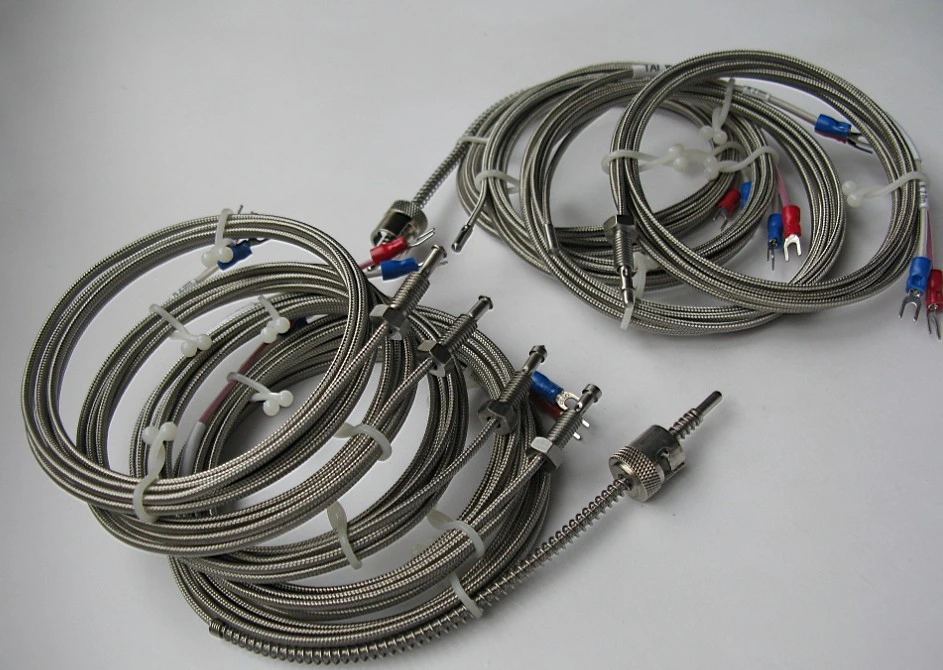
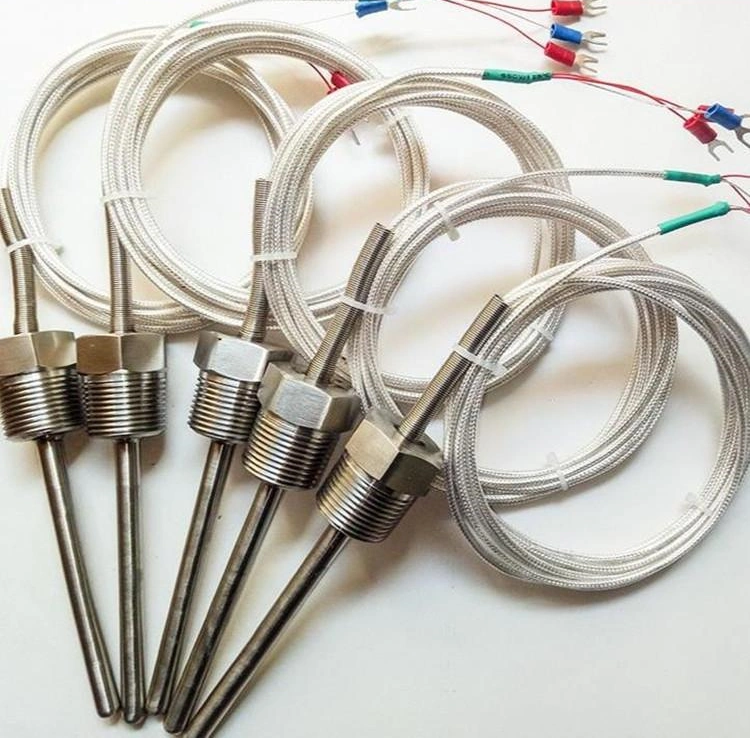
These different types of thermocouples can be used directly, or as part of a sheathed assembly, or with a Thermocouple Sheath.