
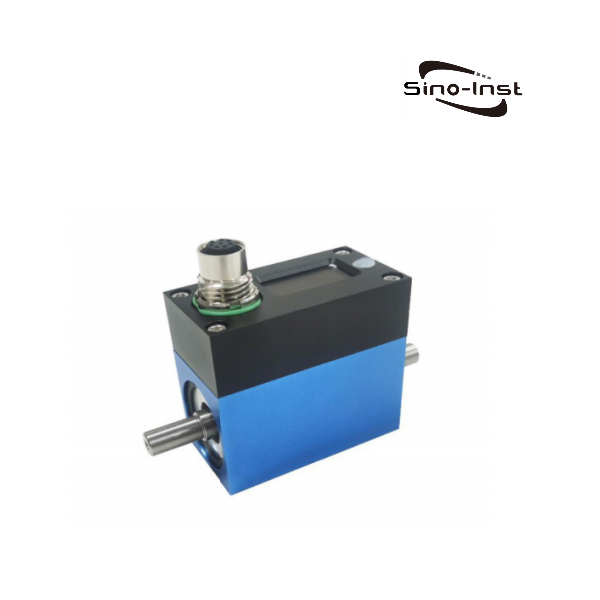
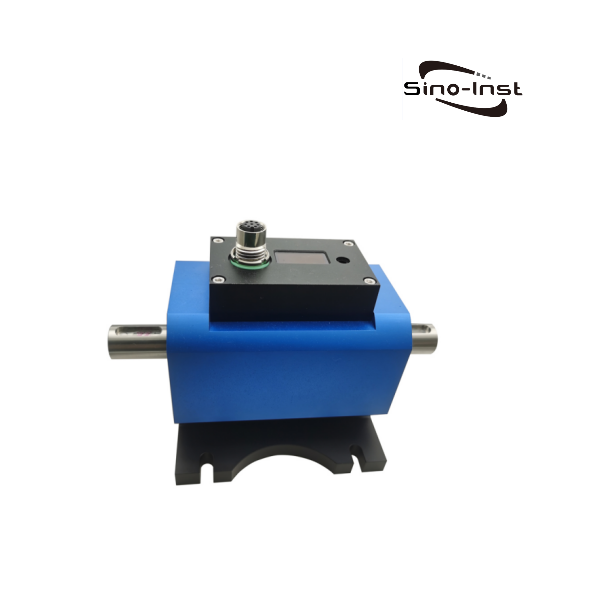
CL1-103 Non-Contact Rotary Torque Sensor – Built-in Encoder Available
This non-contact rotary torque sensor uses a rotary transformer/inductive coupling for signal and power transmission, eliminating slip rings and brushes, allowing for continuous operation at high speeds. It synchronously acquires speed signals via a built-in magnetoelectric or photoelectric encoder, enabling further calculation of output power to meet comprehensive performance testing needs. Get a quote in 24h.
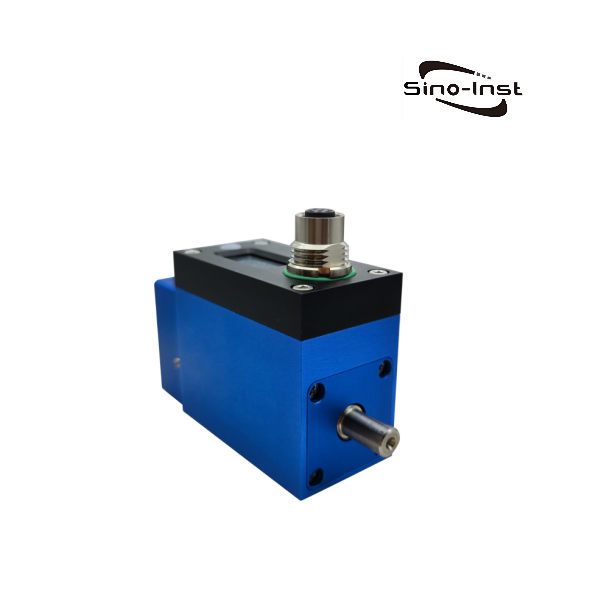
CL1-103 Non Contact Rotary Torque Sensor Technical Parameters
| Range | 0.1, 0.2, 0.3, 0.5, 1, 2, 3, 5 Nm | ||||
| Accuracy | ±0.1, ±0.2%FS | Supply voltage | 12~24VDC | ||
| Zero point temperature effect | ±0.02%FS | Supply current | Less than 100mA | ||
| Full scale temperature effect | ±0.02%FS | Electrical connection | 8-Pin | ||
| Compensated temperature range | -10-60℃ | Overload protection | 200%FS | ||
| Operating temperature range | -20~75℃ | Material | Shaft material 17-4PH stainless steel, housing is aluminum | ||
| Torque output | 10±5kHz(5V amplitude), 0-±5VDC, 0-±10VDC, 0-5-10VDC, 4-12-20mA, 0-5V, 0-10V, 4-20mA, RS485, RS232, CAN, etc. | ||||
| Options | |||||
| Rotation speed measurement | 1024 pulses/circle 4-20mA, 0-5VDC, 0-10VDC, RS485, RS232, CAN, etc. | ||||
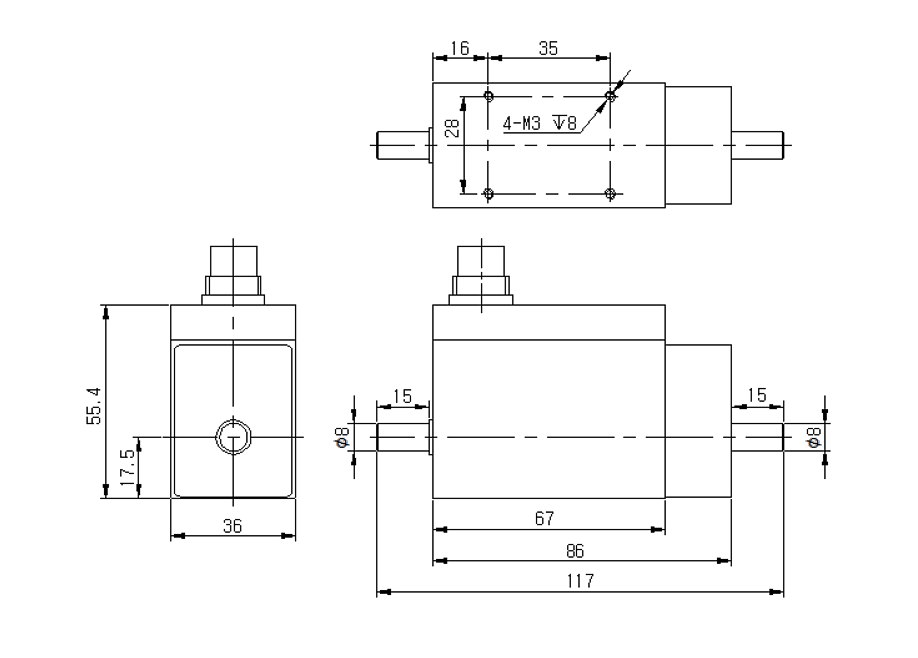
Dimensions
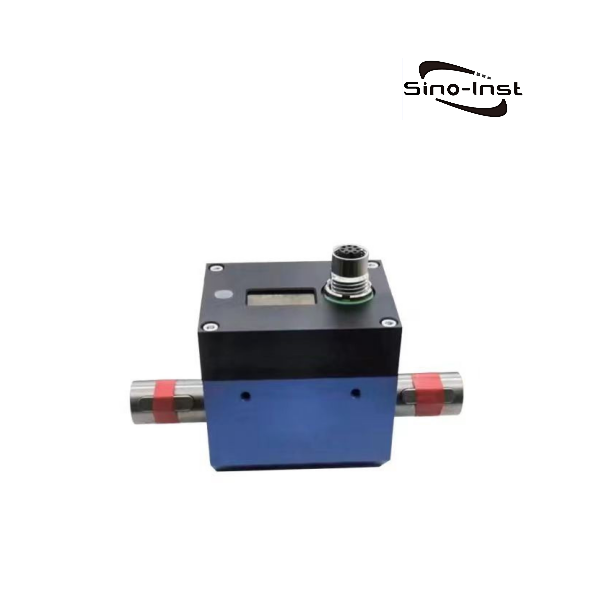
What Is a Non-Contact Rotary Torque Sensor?
A non-contact rotary torque sensor measures torque while the shaft is continuously rotating. It achieves bidirectional signal and power transmission through a rotary transformer or inductive coupling, thus eliminating the need for brushes and slip rings.
The advantages of a non-contact rotary torque sensor are its long service life under continuous high-speed rotation and its ability to measure either rotational speed or rotational angle simultaneously. The disadvantages are that it is larger and heavier than a slip ring torque sensor for the same measurement range (due to its internal structure), and the material cost is also higher due to the internal structure.
Common torque sensors in industrial settings fall into 2 main categories. Understanding the differences before selecting a sensor will prevent you from making the wrong choice:
Static Torque Sensor: Measures instantaneous or slowly changing torque, with rotational speed close to zero or only a limited angular rotation. Typical applications include torque wrench calibration and bolt preload measurement.
Rotary Torque Sensor: Measures torque during continuous high-speed shaft rotation; it is the standard solution for dynamic torque measurement. There are two signal transmission methods: slip ring type and non-contact type. The non-contact type can achieve continuous operation of more than 10,000 RPM because it eliminates mechanical contacts.
Read more about: What Is a Rotary Torque Sensor?
Non-Contact vs Slip-Ring
Rotary torque sensors transmit the microvolt-level signal measured by the strain gauge from the rotating shaft to the stationary housing. There are two main methods: slip-ring and non-contact sensing circuit (rotary transformer). The biggest differences between the two lie in the upper speed limit, maintenance cycle, and long-term stability.
A slip-ring consists of two parts: a conductive ring (usually made of coin-sized silver) that rotates with the shaft, and a spring-loaded brush (usually made of silver graphite) that is in close contact with the ring surface. The millivolt signal output by the strain gauge is transmitted through the contact point between the brush and the ring. It has a simple structure and low cost.
However, the brush and the ring surface are in mechanical contact, which is subject to wear: limited lifespan, requiring periodic replacement; at high speeds, the relative linear velocity between the brush and the ring surface introduces electrical noise, affecting signal quality. For medium-range slip-ring sensors, the typical maximum operating speed is only about 2000 rpm. In small-range applications (e.g., a few Nm), the brush-ring interface itself generates a “dragging torque,” creating additional resistance at the drive end and interfering with the accurate reading.
Non-contact sensors use rotary transformers instead of slip rings. The transformer has two coils: a stator coil fixed to the housing and a rotor coil that rotates with the shaft. Power is coupled from the stator to the rotor, and the strain signal is coupled back from the rotor to the stator; the entire circuit has no mechanical contacts.
Because there is no brush-ring interface, the signal path does not wear. The shaft is only limited by the speed of the bearing itself, typically up to 18,000 rpm, with the CL1-103 further reducing this to 15,000 rpm for smaller range configurations. In terms of accuracy, the rotary transformer solution typically has a combined error on the order of ±0.2%FS, while the CL1-103 achieves ±0.1%FS for ranges above 1 Nm.
If the operating speed is below 1500 rpm, the test time is short, and the range is above 100 Nm, the slip ring type has a significant price advantage. However, if any of the following conditions are met, choose the non-contact method directly:
- The operating speed is consistently above 2000 rpm.
- The equipment runs continuously 24/7, and you do not want to stop for brush maintenance.
- The measurement range is below 10 Nm, and it is sensitive to drag torque (e.g., power tool calibration, micro motor testing).
- The test requires long-term repeated data acquisition, and signal consistency is required.
The CL1-103 is designed for the latter type of scenario: a small measurement range of 0.1–5 Nm, a maximum of 15000 rpm, and a built-in 1024 ppr encoder, suitable for applications where slip ring methods cannot be used, such as motor efficiency test benches and small torque dynamic data acquisition.
Why a Built-in Encoder Matters?
An encoder is a sensor that converts physical motion (rotational or linear displacement) into electrical signals. Its core function is to provide feedback on position, speed, angle, and displacement, forming a closed-loop control system for precise measurement and motion control. In simpler terms, an encoder is specifically responsible for telling the control system (such as a PLC) how many angles a mechanical component (such as a motor shaft) has rotated, how far it has traveled, its speed, and its direction. This eliminates the need for external encoder connections and wiring.
rotary torque sensor Applications
A rotary torque sensor is a device used to measure torque on a rotating system, such as the tightening torque applied by continuous and pulsed power tools.
They can be used to test and measure the level of torque applied by power tools to fasteners, such as nuts on a car wheel or bolts that secure a seat belt. This ensures that it is tightened to the recommended safety level.
Torque monitoring and measurement is an important parameter for the testing, manufacturing, inspection and auditing capabilities of all machinery, vehicles and engines. Some of the key industries that use rotary torque sensors include:
- Aerospace;
- Automotive;
- Military & Defense;
- Heavy Construction Equipment;
- Energy Sector.
Torque sensors can be used with torque testers or data collectors as part of a company’s quality audit equipment, or as part of a complete torque measurement and management system such as a threaded joint rate simulator station.
FAQ
More Torque Sensors and Solutions
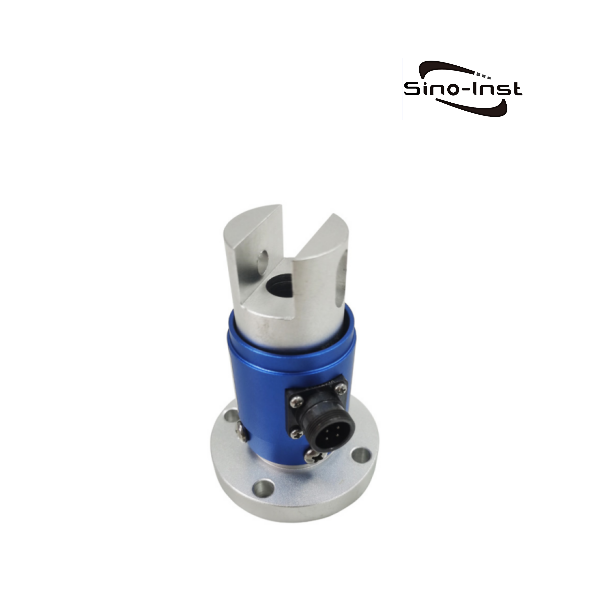
Rotary torque sensors are indispensable instruments for accurately and reliably measuring torque in a variety of applications. By providing precise torque data, Sino-Inst Non Contact Rotary Torque Sensor enables manufacturers to optimize performance, enhance safety and drive innovation.
Whether you are in the automotive, aerospace, military or energy industries, Non Contact Rotary Torque Sensor plays a vital role in technological advancement. If you need to purchase, or have related technical questions, please feel free to contact our sales engineers!

Zhang Wei, possesses 20 years of experience as an automation instrumentation engineer, specializing in the research, design, installation, commissioning, and maintenance of automation instruments.
Face to various instrument communication protocols (such as Modbus, Profibus, etc.), with solid hardware circuit design and software programming skills (proficient in C language and PLC programming). Has extensive project experience; projects he has led and participated in have all achieved outstanding results, improving product accuracy, reducing costs, and increasing production efficiency.
Possesses excellent communication and coordination skills and a strong team spirit, enabling him to quickly respond to customer needs and provide high-quality automation instrumentation solutions.
Non-Contact Rotary Torque Sensor with Encoder | Sino-Inst
Non-Contact Rotary Torque Sensor with Encoder, Range 0.1-5Nm; Maximum speed 15000RPM; Output 10±5KHz, 4-20mA, ±5VDC, ±10VDC, RS485/232; Get price Now
Product SKU: CL1-103 Non Contact Rotary Torque Sensor - Built-in Encoder Available
Product Brand: Sino-Inst
Product Currency: USD
Price Valid Until: 2029-09-09
Product In-Stock: InStock
5